Showing posts with label tables. Show all posts

Tuesday, February 9, 2021

Cathedrals

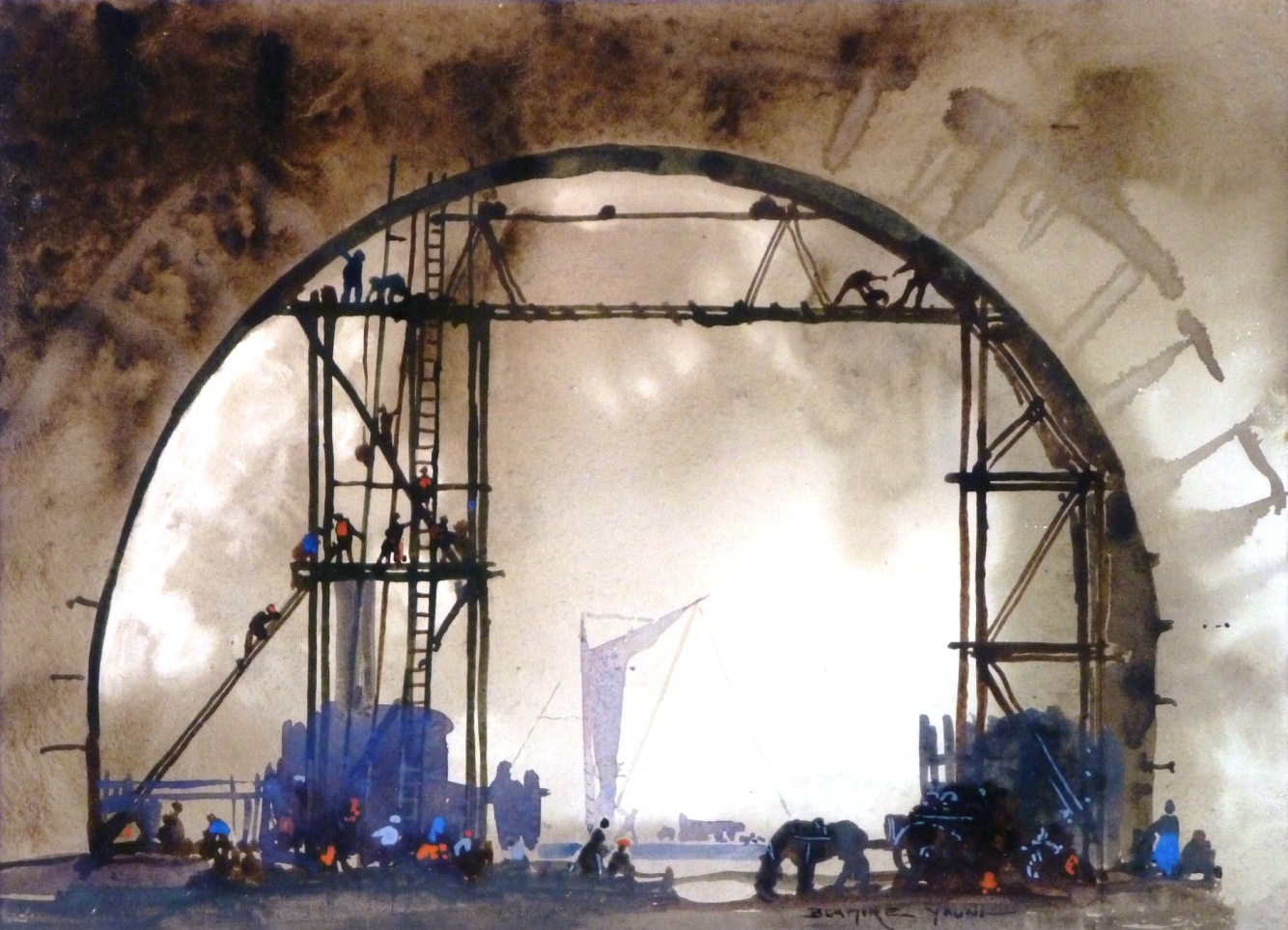
Construction on York Minster Cathedral was finished in 1472, having begun c. 1220. For two-hundred and fifty years, the unfinished cathedral was a part of the city, an ongoing project longer than the life of any one person. In that time it brought in specialists and materials from far away and gave work and benefit to the locals.1

Toolbox

This toolbox is intended to quickly sketch a settlement defined by its largest ongoing project. The locals are building something massive, and this is hopefully a shortcut to intrigue and conflict.

What is it? (1d20)

  1. Amphitheater
  2. Bridge
  3. Canal
  4. Casino
  5. Cathedral
  6. Fortress
  7. Greenhouse
  8. Lighthouse (warning, beacon)
  9. Necropolis
  10. Observatory (telescope, supercollider, lookout)
  11. Palace
  12. Power Plant (wind, solar, nuclear, hydro)
  13. Pyramid
  14. Reservoir
  15. Roads
  16. Ship
  17. Stepwell
  18. Tower
  19. Tunnel
  20. Wall

How far along is it?2 (1d12)

  1. Design
  2. Surveying
  3. Permitting
  4. Site Clearance
  5. Excavation
  6. Foundations
  7. Rough Structure
  8. Exteriors
  9. Interiors
  10. Finishing
  11. Cleanup
  12. Warranty Period

What's the hold-up? (1d10)

  1. Beasts
  2. Beaurocrats
  3. Errors
  4. Funding
  5. Holidays
  6. Ill Omen
  7. Labor (shortage, strike)
  8. Materials (quality, supply)
  9. Plague
  10. Vandals

Why build this? (1d8)

  1. Convenience
  2. Defense
  3. Memorial
  4. Religion
  5. Research
  6. Spite
  7. Tourism
  8. Vanity

Who's building it? (1d6)

  1. Condemned Criminals
  2. Locals
  3. Military
  4. Refugees
  5. Slaves
  6. Sleepwalkers

Secret (1d4)

  1. Corruption in sourcing or labor
  2. Design is of occult significance
  3. Roll a second, hidden purpose (1d8)
  4. None

Thanks to David Macaulay.


1 I assume some of this, but it seems reasonable.back

2 Following the example of a cathedral, the barest functional parts may or may not be completed already.back

Sunday, August 16, 2020

Automatic Tables

In 2012, I was (and still am) fascinated by the random table. A random table presents an exponential number of ideas in a linear space. Recombinant elements play in the gap between improv and rationalization, making each idea potentially unique and interesting. At the same time, raw probability can be leveraged against this massive scale to emphasize recurring themes or elements, building up a world solely through repeated use and implication.

So I took this fascination and built a bunch of tables that required rolling lots of dice to arrive at vaguely “fine?” results (if we’re feeling generous). Now I have the technology to easily automate these things, and I have done so. They might be more useful this way but mostly it was just fun to revisit them.

Snake Oil

“Doc, get me some more of that bottle…”

Sage Names

“All this we know from the writings of…”

Pulp Materials

“You’ll never stop it! It’s made of solid…”

Pub Names

“Not here! Meet me at…”

Holiday Crises

“I’ve called you all here because the holiday season is under threat!”

Tuesday, July 16, 2019

Misc. Notes

It's been a while, and I don't have any large projects to share, but I'd like to keep up the habit of writing here. So I'm writing up some notes I have lying around.

What's That Island

Another island generator in my growing collection.

Where to get it

The Oddvent Oddpendium

What is it

A pair of d100 tables for "Landmark" and "Twist" (38 entries each).

Sample Output

Island 1

Landmark: Blue Grass
Twist: Crashed Sky-Boat

Island 2

Landmark: Gusts of Wind
Twist: Metal Skeletons

Island 3

Landmark: Lone Mountain
Twist: No Time Passes Here

Island 4

Landmark: Huge Waterfall
Twist: Whispering Wind

Island 5

Landmark: Dense Cacti
Twist: Doomsday Device

Island 6

Landmark: Blue Grass
Twist: Metal Skeletons

Notes

This table uses the same type of terse entries as Chris McDowall's Spark Tables, but is just a little more specific. There is the obligatory "Island is a Turtle" entry, which should have been its own point in these roundups. Some things like "Misty" or "Underwater" aren't exactly "Landmarks", but they're evocative so I'll let it go.

Magic Mouth Mishaps

Currently I'm favoring simpler magic systems, but one thing I liked about the revised Lamentations spellcasting rules was that it made you consider a minimum number of distinct miscasts. I made a table of them for Magic Mouth. I tried to make them sufficiently LotFP-ish, but I'm still not sure if I got the timing of the miscasts right, as I have yet to actually play with the revised rules.

  1. Continued recording for double duration.
  2. No volume control. Playback causes sonic damage.
  3. Backmasked. Voice sounds demonic and words are gibberish.
  4. Fourth wall-breaking. Spell captures the caster's player's most recent voicemail.
  5. There is no trigger, the spell just plays on loop and can't be stopped.
  6. The intent of the recording is inverted (e.g. "not" is added in front of the right words).
  7. Actually records the caster confessing a secret.
  8. Actually records a secret about the campaign world, or a heresy. 50% chance true.

What is the volume of a gaseous human?

Assumptions:

  • A "standard" adult is 70 kg.
  • Standard temperature and pressure.
  • 68% of the body is water, and the remaining molecules are large enough to be relatively few in number and therefore negligible.
  • If the previous assumption is one extreme, then the other is that the body is 100% water. This will let us bound the possible values.

Then we do some dimensional analysis and bad math (18 ≈ 22.4, 68% ≈ 50%):

70 kg kg⋅mol 22.4 m3
18 kg kg⋅mol
70 kg kg⋅mol 22.4 m3 ≈ 70 m3
18 kg kg⋅mol

So if a human is 100% water,then they will take up ~70 m3 as a gas, but at the other extreme, they'll be about ~35 m3.

Spark Tables

I've become enamored of Into the Odd's spark tables (above). And I've been looking for them pre-assembled because I'm lazy. I was pleasantly surprised to find this list of 100 Adjectives Used in Basic English, and sad to discover that it only has 99 adjectives in it. I added the ubiquitous "roll twice and combine" to round it out to a d100 table, but this doesn't feel great if you were already rolling twice to find unexpected combinations. I might consider subsetting this list as a starting point for my own spark tables.

  1. able
  2. acid
  3. angry
  4. automatic
  5. beautiful
  6. black
  7. boiling
  8. bright
  9. broken
  10. brown
  11. cheap
  12. chemical
  13. chief
  14. clean
  15. clear
  16. common
  17. complex
  18. conscious
  19. cut
  20. deep
  21. dependent
  22. early
  23. elastic
  24. electric
  25. equal
  26. fat
  27. fertile
  28. fixed
  29. flat
  30. free
  31. frequent
  32. full
  33. general
  34. good
  35. great
  36. gray
  37. hanging
  38. happy
  39. hard
  40. healthy
  41. high
  42. hollow
  43. important
  44. kind
  45. like
  46. living
  47. long
  48. male
  49. married
  50. material
  51. medical
  52. military
  53. natural
  54. necessary
  55. new
  56. normal
  57. open
  58. parallel
  59. past
  60. physical
  61. political
  62. poor
  63. possible
  64. present
  65. private
  66. probable
  67. quick
  68. quiet
  69. ready
  70. red
  71. regular
  72. responsible
  73. right
  74. round
  75. same
  76. second
  77. separate
  78. serious
  79. sharp
  80. smooth
  81. sticky
  82. stiff
  83. straight
  84. strong
  85. sudden
  86. sweet
  87. tall
  88. thick
  89. tight
  90. tired
  91. true
  92. violent
  93. warm
  94. wet
  95. wide
  96. wise
  97. white
  98. yellow
  99. young
  100. roll twice, combine

Thursday, February 7, 2019

I think I might know someone...

When I first moved to Buffalo and didn't know anyone in the area, I ended up staying with my girlfriend's roommate's mother's friends in the area (they were great people). When someone on the OSR discord was asking for a good contacts system I thought I would try my hand at one that reminds me of that connection. I figure this is probably half a solid contacts mechanic, so I hope someone gets use out of it.

Draft One

RollRelation (1d20, 1d10)Ability (1d6)Strength (1d8)Weakness (1d12)
1classmatefence itemloadedowe them money
2roommatecarry stufftrustfuladdiction
3friendemploy partyrespectedsnitch
4fiance(e)get informationloyalhunted
5drinking buddyget itemmannersdumb
6exteach skillcautiouscowardly
7landlordlearnedunwashed
8tenantstronghidden
9coworkerbad blood
10bosscursed
11brothermad
12sisterbusy
13cousin
14uncle
15aunt
16niece
17nephew
18mother
19father
20grandparent

This is what I made initially, and you can see it with a little more in the Google doc. When you have a chance to meet new contacts, you can roll up a contact at two removes (e.g. 1d20 and 1d10 under "Relation"). If that contact doesn't work out for you, add another d10 to relationship, then another d20, and so on each time you need a new contact before you can naturally make more.

Draft Two

Then I thought I'd try automating this process, because that's trendy these days. This generator owes a lot to Betty Bacontime and Spwack's work, but I had to rework it to make it do what I wanted it to.

Friday, December 28, 2018

Tables for a Nautical Campaign

Two junk tables for world building.
Illus. Harry Clarke

Flotsam (1d100+1d6)

Based heavily on Chris G's Secret Santicore 2013 contribution, "What did the ocean barf up this time?". I favor terser entries, so where there is a corresponding entry in that table I have put it in square brackets after. Entries that are bold with a "*" should not be replaced after they are rolled.
  1. 20th Century Radio & Debris [31]
  2. Addictive Air Bubble [81]
  3. Alistair the Whale [78]
  4. Ambergris [40]
  5. Amnesiac Noble [12]
  6. Anchored Ghouls [45]
  7. Baby [62]
  8. Baby Seal [89]
  9. Bagpipes [73]
  10. Barnacled Pier [58]
  11. Barrel of:
    1. Nothing
    2. Ale [63]
    3. Oil [16]
    4. Vinegar[22]
    5. Wine
    6. Admiral Nelson
  12. Blood [41]
  13. Body* [95]
  14. Boot, containing: [1]
    1. Nothing
    2. Foot with Toe-Ring [13]
    3. Prosthetic
    4. Crabs
    5. Gemstones
    6. Smaller Boot
  15. Bottle, with Message: [100]
    1. From a Castaway
    2. Warning to PC from Future Self
    3. Old Love-Letter
    4. Plea for Help from Noble
    5. Deed to Creepy Island
    6. Treasure Map
  16. Bottles, Broken [6]
  17. Box of Chocolates [75]
  18. Bridge
  19. Capstan
  20. Chalk [56]
  21. Chest of MLT [23]
  22. Chill Sea Serpent [84]
  23. Cloak of the Manta Ray [91]
  24. Coracle
  25. Crate of Rations* [32]
  26. Creepy Masthead [21]
  27. Crystal Ball [87]
  28. Cursed Sand-Counter [46]
  29. Diary of a Time Traveler [10]
  30. Dog [82]
  31. Dragon Turtle Shell
  32. Driftwood [34]
  33. Drunk Assholes [70]
  34. Escaped Rowing-slave [15]
  35. Eavesdropping Seashell [60]
  36. Evil Mermaid Wizard [3]
  37. Famous Painting [9]
  38. Fishing Net [67]
  39. Fleet of Paper Boats
  40. Floating City, Run Aground [99]
  41. Floating Wizard's Tower
  42. Floating Zombie
  43. Formal Invitations to Poseidon's Party [37]
  44. Garbage [55]
  45. Genie in a Bottle [33]
  46. Ghost Ship [20]
  47. Giant Egg, Hatches in (1d6x2)2 Hours [14]
  48. Giant Oar
  49. Giant Ornery Clam [35]
  50. Grand Piano [19]
  51. Hallucinogenic Kelp [11]
  52. Haunted Treasure Chest [4]
  53. Hecate [80]
  54. Iceberg
  55. Incandescent Sea-Slime [79]
  56. Invading Military Force [59]
  57. Jaunty Sea-Snail [39]
  58. Lifeboat (False Bottom) [18]
  59. Lobster Trap (1d6-1 Lobsters)
  60. Lodestone [64]
  61. Loose Buoy
  62. Loose Oranges (1d6x100) [77]
  63. Love Bomb [97]
  64. Lovers [69]
  65. Moldy Rope [57]
  66. Murderous Mutineer [5]
  67. Namor [66]
  68. Nereid [38]
  69. Oil Slick
  70. Oracle Tortoise [61]
  71. PC Sibling [17]
  72. PC's Favorite Bag [86]
  73. Pirate Philosophers [26]
  74. Pirates Burying Rum [92]
  75. Pleasure Barge [54]
  76. Poltergeist with Anchor [27]
  77. Pumice
  78. Queen Seekers [28]
  79. Rando Sailor*
  80. Random Potion
  81. Refugees [44]
  82. Rower Golem
  83. Sailcloth
  84. Sea Chariot [76]
  85. Sea Devil [68]
  86. Seagull [51]
  87. Ship's Manifest [74]
  88. Ship's Mast
  89. Skipping Stone [65]
  90. Soul-Swapping Sea Cucumber [88]
  91. Swimmer Racing Shark [43]
  92. Tiny Deity [48]
  93. Trail to the Far Lands [7]
  94. Tricorne Hat [90]
  95. Trident [72]
  96. Upright Mirror
  97. Vikings [96]
  98. Waterskin*
  99. Wooden Shoes [83]
  100. World-Shattering Horror [98]

"I Search the Body…" (1d100+1d6)

There is an implied real-world setting to some of these. Entries that are bold with a "*" should not be replaced after they are rolled.

1-50. Number of sp equal to d100 roll just thrown.*
  1. Abacus
  2. Astrolabe
  3. Auger
  4. Barometer, Wrong
  5. Block & Tackle
  6. Chalk
  7. Coded Message
  8. Compass
  9. Contagious Tattoo
  10. Crowbar
  11. Cup-and-Ball Toy
  12. Deck of Cards
  13. Dowsing Rods
  14. Ear Trumpet
  15. Fine Perfume
  16. Flares (1d6)
  17. Flask of Rum*
  18. Flute
  19. Giant Shark Tooth
  20. Grappling Hook
  21. Grenades (1d6)
  22. Hand-Hooks (1d6)
  23. Hatchet
  24. Keys
  25. Knitting Needles
  26. Letter of Marque
  27. Live Fish
  28. Mattock Head
  29. Mop Heads (1d6)
  30. Packet of Seeds
  31. Pearl Eyeball
  32. Pocket Bible, Annotated
  33. Political Pamphlet
  34. Rations* (1d6)
  35. Scrimshaw
  36. Sea Salt
  37. Seaglass
  38. Sewing Kit
  39. Sextant
  40. Silk Rope
  41. Snuffbox Full of Parmesan
  42. Spare Flag:
    1. Dutch
    2. English
    3. French
    4. Portuguese
    5. Spanish
    6. Other
  43. Spyglass
  44. Treasure Map
  45. Tuning Fork
  46. Voodoo Doll
  47. Wanted Poster for:
    1. Corpse
    2. Party Patron
    3. PC
    4. PC's Sister
    5. Rando
    6. Rival
  48. Waterskin*
  49. Weights & Scale
  50. Whistle

Addendum

I have removed a mention of a product by Zak S. and also a link to some work I did related to his Discord server. For more information, see my post here.

Friday, November 2, 2018

What's the Deal with this Island? (Pt.1)

There are lots of tables and methodologies for making islands. I've looked over the ones I could find and collected them here.

At Sea in the Tropics

Where to get it

The Rusty Dagger
This was also part of Secret Santicore 2011.

What is it

A set of six d10 tables: "Cliffs", "Night", "Random", "Ships", "Creepy", and "Islands".

Sample Output

Island 1

Large mechanical insects are scattered across this island. They lie dormant as if, waiting for a signal.

Island 2

This island appears to be a solid chunk of smooth and rounded stone. That outcropping looks almost like a nose. Is the whole island a half submerged head?

Island 3

This is actually and archipelago chain which has been formed into a an island nation. It is a primarily agricultural based society, or it was until the plague struck. The pox struck nearly everyone, so now the stench of rotting bodies and crops is noticeable well out to sea.

Island 4

This is actually and archipelago chain which has been formed into a an island nation. It is a primarily agricultural based society, or it was until the plague struck. The pox struck nearly everyone, so now the stench of rotting bodies and crops is noticeable well out to sea.

Island 5

This is actually and archipelago chain which has been formed into a an island nation. It is a primarily agricultural based society, or it was until the plague struck. The pox struck nearly everyone, so now the stench of rotting bodies and crops is noticeable well out to sea.

Island 6

Volcanic eruptions are creating a new island here. Huge steam clouds form as magma pours into the sea, and black ash falls like snow for miles.

Notes

It's unclear how to use some of the tables, but lots of the ideas are evocative. Because there are only 10 options in "Islands", some of the sample outputs are repeated.

Welcome to Fantasy Island

Where to get it

This was part of Secret Santicore 2014 (p. 22-24, here).

What is it

A set of eight tables: "Normal Island Types" (d20), "Exotic Island Types" (d6), "Ocean Island Weather Events" (2d6), "Adventure Themes" (d12), and four encounter tables (d12) for islands of different sizes.

Sample Output

Island 1

Sea Stack (large)
A narrow rock, taller than wide, and more than 30’ tall.
The Island is home to a shunned, but noble people.

Island 2

Islet (small)
A small patch of land supports a copse of trees, apron of sand.
The island is a massive arena where things fight for the pleasure of unseen overlords.

Island 3

Rock (tiny)
A single large piece of rock jutting up from the water.
The island is a massive arena where things fight for the pleasure of unseen overlords.

Island 4

Greater Island (huge)
A large landmass that includes hills, volcanoes, and real forests.
The island holds is lost culture, advanced in magic.

Island 5

Rock (tiny)
A single large piece of rock jutting up from the water.
The island is a massive arena where things fight for the pleasure of unseen overlords.

Island 6

Cays (large)
A landmass rich enough for a small community of humans.
The island holds a lost culture, advanced in magic.

Notes

I did not include the weather or encounter tables in the sample results, but they may be useful in a pinch. I also did not end up with any "Exotic" island types, because they are only rolled for on a 20, but that could be OK for an extended island campaign. The final "Adventure Themes" table is interesting, but strangely weighted for a d12 (fully 1/3 of the results are "The island is a massive arena[…]").

Mazes & Minotaurs

Where to get it

Mazes & Minotaurs is free here. Island generation is on p. 28-29 of the Maze Masters Guide.

What is it

A set of 14 nested tables (mostly xd6)

Sample Output

Island 1

Ringed by smooth, sandy beaches.
Town with some surrounding villages.
The inhabitants live in harmony.
Remote temple
Gigantic Cyclops

Island 2

A variety of coastline exists.
Powerful city ruling an island kingdom.
Gruesome secret. Is a god involved?
Secretive tower
Hydra
Sphinx

Island 3

A variety of coastline exists.
Small villages.
They have never seen outsiders!
Old road
Lycans
Roc
Stone Titan

Island 4

Ringed by high cliffs.
No settlements, uninhabited by humans.
Ruined fortress
Myrmidons [tiny warriors]
Serpent Men
Sphinx

Island 5

Ringed by high cliffs.
No settlements, uninhabited by humans.
Secretive tower
Ghosts

Island 6

A variety of coastline exists.
Town with some surrounding villages.
Islanders regularly attacked by a cruel monster.
Territorial markers (skulls etc.)
Giant Spiders
Giant Eagles
Empusae [vampire witches]

Notes

I really like this one, but it is more of a process to generate an island. Instead of one or two complicated elements, the tables focus on simple elements, and as you fill in the island, you can imagine how they interact. For all that, it sill goes pretty quickly. I think that the tables unnecessarily combine dice, which will lead to e.g. "Gruesome secret" being more common than "Athletic games underway", and I don't see why that is. If I were using these for an extended campaign, then I'd probably just discard duplicate results.

Tome of Adventure Design

Where to get it

You can buy it from Frog God Games ($21). This is p. 290 of  my copy.

What is it

Two d100 tables: "Unusual Island" (d100), and "Owner of the Island" (d100).

Sample Output

Island 1

Vegetation on the island is intelligent and dangerous.
Titan

Island 2

Island is a graveyard for ships.
Leader of aquatic humanoid tribe

Island 3

Island is a graveyard for ships.
Ghostly leader with minions

Island 4

Central volcanoes.
Powerful religious leader (non-human)

Island 5

Cyclopean statues.
Storm giant

Island 6

Island is a living creature and any tunnels probably lead to internal organs.
Mist creature.

Notes

This isn't really what the book is good at (it's more for brainstorming), so it seems a little unfair. There are only 10 items on "Unusual Islands", so it could just be a d10 table, but everything in the book is mapped to a d100 table.

Pathfinder GameMastery Guide

Where to get it

You can buy it from Paizo ($45 print/$10 PDF). This is p. 216 of my copy.

What is it

One d100 table (25 entries).

Sample Output

Island 1

Island with trees that behave like natural siege artillery, firing enormous nuts and fruit at ships passing too close to shore.

Island 2

Reef rules by warring kingdoms of sentient crabs.

Island 3

Island almost entirely made up of old shipwrecks.

Island 4

Iceberg with a ship trapped in it.

Island 5

Frigid island in the far north filled with countless misshapen monsters trapped within its ice.

Island 6

Frigid island in the far north filled with countless misshapen monsters trapped within its ice.

Notes

I quite like the tables in the Pathfinder GM book, even for non-pathfinder games. There are some other good tables in the "Water Toolbox" section, including "Pieces of Interesting Flotsam", "Ghost Ships and Shipwrecks", and "Sailors and Boatmen".

Weird Science Fantasy Island Generator

Where to get it

Weird & Wonderful Worlds

What is it

A set of eight nested tables.

Sample Output

Island 1

Small
Fungal forest
Volcanic
Singing flowers
Apex predator: Camouflage golems
Threat: Long-range reptiles
Other: Reptiles, Fungus
Treasure: 200 gp natural resources

Island 2

Small
Short grass or mossy
Coral forest
Perpetual, localized storm
Apex predator: Super fast golems
Threats: Fast Reptiles, Trap-making birds
Other: Plant animals, Golems
Treasure: 400 gp ancient relic or natural oddity (special)

Island 3

Small
Tall, sparse trees
Synthetic (plastic, metal, etc.)
Apex predator: Massive birds
Threat: Poisonous golems
Other: Mammals
Treasure: 600 gp ancient relic or natural oddity (mundane)

Island 4

Large
Fungal forest
River of cold blue magma
Apex predator: Fish able to swallow a man whole
Threat: Poisonous mammals
Other: Reptiles, 2 different kinds of arthropod
Treasure: 800 gp ancient relic or natural oddity (special)

Island 5

Tiny
Fungal Forest
Synthetic (plastic, metal, etc.)
Apex predator: Super strong reptiles
Threats: Strong reptiles
Other: Mammals
Treasure: 100 gp natural resource

Island 6

Tiny
Dense, woody forest
Floating building-sized plates
Singing flowers
Scattered, ancient, advanced relics
Apex predator: Poisonous fungus
Threats: Durable fungus
Other: Mammals
Treasure: 200 gp natural resource

Notes

This is most similar to the Mazes & Minotaurs generator, but feels slightly less interesting, I think because it leaves the categories so broad (e.g. "mammals"). I quite like the re-use of base types though, so that we can see Island 5 has Super Strong Reptiles that prey on Strong Reptiles, for example. I also like the conceit of building the "ecosystem" on each island.
I did arbitrarily make the decision that each niche could not support more "species" than the size roll of the island.
These tables would be much faster if there were numbers in front of the options.

Uncharted Isles: a Saltbox Generation Toolkit

Where to get it

Billy Goes to Mordor

What is it

Unlike the other tables here, this is actually a method for mapping a bunch of islands.

Sample Output

Island 1

Small (1 square)
Rocky
Ruin: Settlement of a monstrous race, with a plague or curse
Person of Note: Naval Officer

Island 2

Large (9 squares)
Surrounded by hidden reefs
Salt-swamp
Ruin: Fortress of a wizard, with monsters
Ruin: Settlement of a wizard, with technology
Ruin: Other ruin of a wizard, with a plague or curse
People of Note: 3 Natives, 1 Colonist, 2 Pirates, 1 Naval Officer

Island 3

Small (2 squares)
Jungle
Ruin: Settlement of a humanoid race, with a treasure
Ruin: Temple of a humanoid race, with a weapon
People of Note: 2 Pirates

Island 4

Medium (7 squares)
Rocky
Ruin: Industrial/scientific complex of a wizard, with technology
Ruin: Fortress of a giant race, with a plague or curse
Ruin: Fortress of an ancient pagan race, with technology
Ruin: Other ruin of inhuman things from another dimension, with a survivor
Ruin: Temple of an ancient pagan race, with monsters
People of Note: 3 Natives, 2 Colonists, 1 Escaped Slave

Island 5

Medium (7 squares)
Freshwater river
Rocky
Ruin: Settlement of inhuman things from another dimension, with a weapon
Ruin: Settlement of a monstrous race, with monsters
Ruin: Temple of a humanoid race, with a plague or curse
Ruin: Settlement of a giant race, with a plague or curse
People of Note: 2 Natives, 1 Colonist, 1 Escaped Slave

Island 6

Large (18 squares)
Freshwater river
Surrounded by hidden reefs
Jungle
Ruin: Tomb of inhuman things from another dimension, with a survivor
People of Note: 3 Natives, 1 Colonist, 1 Escaped Slave

Notes

I misunderstood the directions and placed 1d6 ruins on each island, instead of distributing them. I did the same thing for persons of note. This has made for some very dense islands, and a less enjoyable generation experience, but I hope that this will not reflect undeservedly on the toolkit.
I arbitrarily decided island size by 1d4 (this seems common). I limited hte number of ruins and notable people that an island can hold by the size roll. I also skipped names and interrelations of the notable people, and I skipped settlement and lair generation as well.

Worms Upon a Piece of Wood

Where to get it

Legacy of the Bieth

What is it

Five nested tables (for island generation), and an ocean encounter table.

Sample Output

Island 1

Flock of monstrous avians (harpies, perytons, etc.)

Island 2

Inhabitants are very welcoming to outsiders, but have strange customs which wind up causing pain. Sindbad encountered this with the islanders who insisted he marry one of them, but then revealed that if one spouse dies, the other is buried alive with them. Some other examples might be ritual sacrifice

Island 3

Cannibals

Island 4

Sorcerer keeping the populace in thrall through use of charm spells to set up a secret police. No, everything's fine here in this little island village, how are you?
Demon-possessed large animals (think the Lions of Tsavo but worse and all demonic) committed to terrorizing the locals. No interest in rulership or gross consumption, but to cause pervasive terror. Or they're waiting for something, killers even more horrendous than the animal that they now ride...

Island 5

Perfectly symmetrical island. When structures are built on one side facsimiles will appear on the other. Same for the remains of any sapient being. Every day that a facsimile is separated from the island, roll a d6; on a 3+ the facsimile disappears.

Island 6

Colony of ghuls - erudite, urbane, eaters of the dead, and running out of consumable corpses.

Notes

Even though the tables are nominally held together by a 1d4 table, and there is the possibility of combining multiple options, I feel like the options are complete enough and the overlaps simple enough that this might work better as a single table.

Low Country Point Crawl Prep: Barrier Island Generator

Where to get it

Unlawful Games

What is it

Four d20 tables.

Sample Output

Savage Man’s [Island]

Small, Forested
Natives

Dead Alligator [Island]

Medium, Rocky
Uninhabited

Green Man’s [Island]

Medium, Marshland
Uninhabited

Hermit Helena’s [Island]

Medium, Sandbar
Natives

Surly Helena’s [Island]

Large, Structures
Uninhabited

Lost Snake [Island]

Medium, Marshland
Colonists

Notes

Apart from the names of islands, I don't feel like this table is really adding a lot. Similar to "Welcome to Fantasy Island", there is a subtable for "Other" islands, but it is only used on a roll of 20.

100 Uncharted Islands

Where to get it

DnDSpeak

What is it

One d100 table, 100 options. Handy "Generate" button.

Sample Output

Island 1

An island with only one inhabitant, a crazed artist trying to find his muse. He will paint portraits of all who visit him but will destroy them hours later as they did not meet his standards and do not show his inspiration for art.

Island 2

A small rocky island. On the South side, a dock pokes tentatively out of the mouth of a cave at sea level. A long staircase winds up inside the rock from the cave to a temple on the top of the island, long abandoned. The Western side houses a small beach, then a sheer cliff overlooked by the temple gardens, now overgrown. The rest of the island is barren rock, rising upwards from the sea.

Island 3

This island seems to be in constant movement... Turns out it actually is a tiny island that sits on top of a enormous turtle that roams the surface of the ocean. The island is a patch of sand and dirt that sits on its shell, a single, tiny tree sits on top of it.

Island 4

A tiny rocky island with a large tower, the top is illuminated by a very powerful Light spell. This is used as a lighthouse but there isn’t a shore nearby, the lighthouse keeper is elderly and doesn’t remember why they are there or who sent them.

Island 5

A giant knot of vegetation. Kelp extends deep into the waters below, and mangrove-like trees are rooted into the mats of kelp.

Island 6

An island is floating above the sea, about twenty feet from the top of the ocean. On top of the island is a library run by Chameleon warriors who travel around collecting books for their massive library. You can find information about nearly any civilization here, for a price.

Notes

As a crowdsourced-from-reddit table, the quality of entries varies wildly. At least one entry is just a list of short suggestions that were never properly separated, multiple entries are the Zaratan, multiple entries are giant skulls that only look like islands, the units are arbitrary (feet, km, miles, meters), etc. Still, there's some good stuff too, and as the first 100-entry d100 table it is at least full of variety.

Islands in the Sky: Random Island Generator

Where to get it

A Pack of Knolls

What is it

Four tables with some nested rolls and a sky travel encounter table.

Sample Output

Island 1

1 sq mile, plains/prairie
Organized militaristic humanoids
100% human

Island 2

1 sq mile, fey or shadow
House on a hill (occupied)
20% gnome, 20% dragonborn, 20 % shadar-kai, 20% fomorian, 20% drow

Island 3

3 sq mile, fey or shadow
Artisan town
100% human

Island 4

0.5 sq mile, badlands
Small trading village
100% troglodyte

Island 5

24 sq mile, desert
Wilderness
100% wilden

Island 6

4 sq mile, fey or shadow
Wilderness
100% human

Notes

The racial makeup is not very evocative for me, and consequently I feel that these tables also do not carry their weight. Technically these are sky-islands, but I figure the principles are the same.

D100 Islands

Where to get it

Elf Maids & Octopi

What is it

Two d100 tables: "Insular Islands within and around Exile Island", and "Islands and oceanic phenomena on Planet Psychon".

Sample Output

Island 1

A lonely, haunted gravesite, haunted by one undead.

Island 2

Grog shop under tarpaulin over fallen tree with local exotic sentients drinking together

Island 3

Lich dwells in a fortified tomb and a lich inside has power only limited by corpses

Island 4

Drunken cult of the wine god holidaying here in stupors

Island 5

A vampire lord is trapped here, a crumbling collapsed manor is only remnants

Island 6

A gigantic sea serpent hides in a cave here to recover from encounters with worse monsters

Notes

I did not see the second d100 table, so none of the sample islands were generated from it. I generally like these, but some of them link to other d100 tables, and I don't think there's any particular "island" feeling about those ones.

Adrift Amid the Random Isles

Where to get it

Tales from the Sorcerer's Skull

What is it

Six tables

Sample Output

Island 1

Volcanic (active)
Large
Sahuagin, war-like women (man-hungry)
Earth-bound god

Island 2

Coral atoll
Large
Uninhabited

Island 3

Volcanic (active)
Small
Animals
Froghemoth

Island 4

Voclanic (extinct)
Small
Humanoid cargo cult

Island 5

Volcanic (active)
Medium
Uninhabited
Living statues

Island 6

Mountain top of a drowned continent
Very small
Animals
Giant animal

Notes

By making civilization so rare, I feel like the more interesting possibilities of these tables are limited.

Wednesday, October 17, 2018

Why is this boat?

Some possible passing ships.

Why is this boat? (1d20)

  1. Wine merchants traveling in a large circle to age their cargo of Madeira. Very bad at sailing because they weren’t willing to pay any experienced crew.
  2. The hold is filled with crates of earth and a coffin. Otherwise deserted.
  3. Lycanthropes who set out to sea with no plan other than to escape their curse.
  4. Pilgrims seeking a spot in the middle of the ocean where they believe their patron saint drowned.
  5. Scientists hailing from a distant land. Tasked with charting the seas, recording other cultures, and taking samples of flora and fauna back with them.
  6. Salvagers, attempting to recover a previous salvaging expedition. Know where they’re going, but not what the original was seeking. Increment if re-rolled.
  7. Monkeys. Do they know where they’re going? How did they learn that?
  8. Smugglers who can’t return to port until they figure out how to stop their ship glowing at night.
  9. Lone man in a kayak. Does not speak any common language. Grateful for assistance, but unconcerned that he is far from home.
  10. A diver convinced that there is an underwater civilization right below him. No one else sees any evidence, but he’s wealthy, so everyone humors him. He endeavors to be the first ambassador to that civilization.
  11. Mutineers who never agree. Any given member of the crew has been captain, prisoner, or both. They want the PCs to take the most recent captain off their hands (they have no more rafts).
  12. Heretic monks who were kicked out of their monastery.
  13. Lone pirate captain, stranded on a life raft after a mutiny.
  14. The entire navy of a local noble’s vanity micronation (two vessels). Out practicing war games.
  15. Woman with magic boots can walk on the surface of the water (no boat).
  16. Weird merchants. See e.g. Gorgonmilk's Goblin Market.
  17. Cannibals.
  18. Tax collectors / excise ship.
  19. Stowaway who has just escaped your ship in your life raft.
  20. Conquistadors.

Addendum

Previously, this post referenced some work by Zak S. Because it was not necessary, I have removed these references. For more about my views on Zak, see here.

Sunday, February 17, 2013

Inactivity, Hobos, & Celts

It's been a while since I've done anything with this space. I missed BFRPG day (but I did find that BFRPG exists, and is cool), I submitted an entry to the Great Khan's contest (that will get its own post later), I found the Planescape appendix to the Monstrous Manual (which is pretty much everything I wanted from a monster book), and I've had classes (blah).

Hobo Treasures

Gus at Dungeon of Signs has made a table of hobo treasures. A while ago, I was part of an effort to clean up the shores of the Merrimack river, and here is a list of less exciting treasures inspired by that expedition (roll 1d20).
  1. Flat piece of slate. 1 in 6: cannot be erased by standard means.
  2. Evacuated turtle shell—some hobo's dinner.
  3. Explicit letter in a bottle. The contents are nonsensical and offensive, and the next 1d6 found will all be exactly the same.
  4. Strange seed pods. Roll 1d200: number of seeds found.
  5. Melted children's toy. Ours was a headless plastic dinosaur.
  6. Monkey wrench, rusted solid.
  7. Small cache of lighters. Roll 2d12: the higher is the number of lighters, the lower is the number that still have a bit left.
  8. Large stack of moldy pornographic magazines.
  9. Newspapers. Roll 2d20: the higher is the age of the oldest paper found.
  10. Blankets, cardboard boxes. 1 in 20: has a hobo in it (daytime), does not (nighttime).
  11. Beer cans and wine bottles. There is never any left.
  12. Tiny circular filters, ~0.5" diameter. Roll 1d200: number of filters washed up on shore.
  13. Planks or other lumber. Roll 1d6 for number.
  14. The remains of a fire (daytime). A hobo campfire with 1d4 hobos (nighttime).
  15. Metal cable strung between two trees, 1d6*10' in length.
  16. A refrigerator (if this doesn't work for the setting, substitute an icebox).
  17. A Little Tykes Cozy Coupe (if this doesn't work for the setting, substitute a little red wagon).
  18. An old streetcar rail (if this doesn't work for the setting, substitute a low stone wall).
  19. Miscellaneous drug paraphernalia (spoons, needles, etc.).
  20. Skewered rodent skeletons.
The seed pods, it turns out, were Eurasian water chestnuts, which not only look sinister, but are an invasive species.
Eurasian water chestnut seed pods (image source: here).

Celts

The Great Khan is having another contest in March (skipping this month), and the theme will be the celts. Everything I know about the celts I learned from "Horrible Histories: The Cut-Throat Celts", so I'm looking forward to this. The contest itself has not actually started yet, but here are some thoughts I've had:
  • There is already an implicit Celtic influence in most versions of D&D: the druid and bard classes are historically found only in Celtic cultures.
  • The Celts made brain-balls by mixing the brains of their fallen enemies with lime. These were carried around as trophies but it was believed that they could still take vengeance on their owner.
  • Celts were big into curses. I like Zak's rules for curses (item 73).
  • Celtic saints were not necessarily nice people, which is convenient for the D&D cleric archetype. They also tended to do things after their death.

Sunday, January 20, 2013

Bestiaries and The Ubiquitous Sages

Bestiaries

The Ashmole Bestiary (Source: Wikipedia)
Monster books are great. Let's look at some more obscure ones than the Monster Manual that everyone knows.

Bonus Bestiary

by Jason Bulmahn and F. Wesley Schneider

Paizo released this pamphlet as a preview of the Pathfinder Bestiary on Free RPG Day 2009.
  • It's marked "3.5 OGL Compatible" on the back, even though it uses the Pathfinder rules. I guess they're close enough that Paizo was hoping not to scare people.
  • At the time of printing, the Bonus Bestiary was monsters that didn't fit in the main book, and so this was the only place for them. Some of them I can imagine were missed (the Allip), and some of them less so (the Ascomid).
  • As of the Bestiary 3, I think all of the monsters in this book have appeared in other Pathfinder supplements.

Monster Manual II

by Ed Bonny, Jeff Grub, Rich Redman, et al.

A follow-up to the 3.0 Monster Manual. Hereafter referred to as MMII.
  • Pages 4-21 explain how to read a monster's write-up, but the information is complete enough that it could probably be used for making monsters too (a laborious task in 3.X).
  • The last two monsters (Scorpion Folk and Razor Boar) are designated open game content, which I think makes MMII unique among non-core WotC publications (Technically even including core: IIRC the books themselves are not OGC, only the SRD). I wonder what might have been.
  • The MMII is unique among the monster manuals for never getting a 3.5 printing.
  • I think the skull on the cover is meant to be that of an ethereal marauder, but I don't know that there's a "canon" solution.
  • This book is often remembered for its stupidly high-level monsters, but in fact, they do not comprise the majority of the monsters (see Figure 1). I remember it more for introducing me to many of the more off-beat monsters from older editions, such as myconids and thri-kreen. A lot of the new monsters are pretty uninspired though; it's very hit-or-miss.
Figure 1: Challenge rating distribution in MMII.

Legions of Hell

by Chris Pramas

I think I got this free with a subscription to Dungeon magazine a while back. It's pretty good though.
  • The stat blocks are irrelevant, as are the templates and prestige classes. What really makes the book worthwhile is the dozens of detailed devils with their schemes and manoeuvrings through the political structure of hell. Each of them has goals and activities outlined both in hell and in the material plane.
  • I appreciate that entries frequently play off of each other. For example there are rival dukes of rhetoric and eloquence (appealing to logic and the psyche, respectively). It gives the book a very complete feeling.
  • The book has occasional tie-ins with Hell in Freeport, which I do not own. But I would be interested to see if any of it also appears in the associated "world of Freeport" settings; I seem to recall that Green Ronin had all of their settings in a shared world.

The Ubiquitous Sages

As it was noted in "Let's Read the Monstrous Manual", many monster write-ups refer to "sages" with strangely specific knowledge and theories, implying some sort of twisted academic discourse in the D&D universe. When writing, it's an easy trap to fall into: when I do it it's because sometimes I just don't want to decide how something works, or I think something is a good idea but struggle to make it interesting, or I have multiple conflicting ideas. Basically, it's because I'm lazy (although I do try to catch myself doing it).
This fall-back device has some strange implications though. Take, for example, this passage from the AD&D Monstrous Manual:
Naturally vicious and almost evil at times, displacer beasts harbor an undying hatred of blink dogs. Many theories attempt to account for this enmity. Some sages believe it springs from antipathy in temperaments -- the lawful good blink dog would naturally be the enemy of a creature as savage and destructive as the displacer beast. Others argue that it is the displacement and blink abilities which cause this antipathy -- the two abilities, when in close proximity, somehow stimulate the nervous system and produce hostile reactions. Encounters between the two breeds are rare however, since they do not share the same territory.

Authorship

The judgements implicit in "almost evil" and "undying hatred" contrast sharply with the pseudo-scientific prose in the rest of the text. On the other hand, the back-and-forth of competing theories suggests a reliable communication infrastructure, the use of "sages" and "others" plural suggests a community of academics, and the note that natural encounters are rare introduces the possibility of a controlled laboratory environment, complete with technology that can contain an ethereal blink dog.
The contrast of these prose styles might be explained by the method of writing of a real medieval bestiary: Greeks and Romans would hear stories from all over and write them down. Then monks would copy, translate, and illuminate, these manuscripts, and add a layer of Christian allegory. In some cases, these were then later translated again with annotations, like this one, leaving many competing authorial voices. I think this (possibly unintentionally) makes for a somewhat more "realistic" bestiary.

Naming the Sages

If there is an academic community however, these books do a pretty poor job of citing things. Proper citations and references might be a bit much, but let's at least name the sages. Take the above blink-dog passage:
Many theories attempt to account for this enmity. [Nymphitylus believes] it springs from antipathy in temperaments -- the lawful good blink dog would naturally be the enemy of a creature as savage and destructive as the displacer beast. [Marixtus the Optimist argues] that it is the displacement and blink abilities which cause this antipathy -- the two abilities, when in close proximity, somehow stimulate the nervous system and produce hostile reactions.
I think the addition of names is a minor change that adds a more academic tone. I can easily imagine several names reappearing throughout a text, alluding to the nature and reliability of different sources.
Of course, names for ancient sages should be Greek. So here is a table to name them:

Sage Names

A half-dozen samples:
  • Hegetius of Stratonicia
  • Hierocrates the Epicurean
  • Porphygias the Cynic
  • Phaeneas
  • Alexagnote Mallotes
  • Carneacydes of Athens
Epithets can be generated with a d100, or a d30 to exclude place names, or a d20 to exclude Greek epithets. On 1-2 in 6, I exclude the epithet all together.

Monday, January 14, 2013

Recollections of 3.0 and Roman Names

Recollections of 3rd Edition

The type of thing I did just recently, may be one of the better things I have chanced upon: I feel much better about getting rid of things after I've enumerated reasons I should, and I feel better about keeping things if I'm more familiar with them. For now, I'm looking at my 3.0 books, since they've been mostly superseded by 3.5 and Pathfinder.

Player's Handbook

by Jonathan Tweet, Monte Cook, and Skip Williams

This wasn't my first exposure to D&D (I got started from a 3.0 boxed-set), but it was close to it. It's well-used and held together with masking tape these days.
  • The first printings of the core rules (2000) were priced at $20 ea. I don't know if WotC planned to take a hit on the core rules and get it back in the extras (like consoles), or if they were genuinely cheaper, but I've ever since felt slightly betrayed by $40+ rulebooks.
  • The PHB was the first of the three core books to be printed. As such, my printing has a "2000 Survival Kit" in the back, containing basic monsters and magic items, and rules for DMing and designing a dungeon, as well as a sort of quick-start dungeon. I always felt that the other two core books were somewhat extraneous after these 16 pages.
  • It came with a CD. I don't know what was on the CD, but I think it was a version of Character Gen, which is now a nifty open-source program.

Dungeon Master's Guide

by Monte Cook, Skip Williams and Jonathan Tweet

So far as I know this book is largely unchanged in 3.5 anyway. The only thing I've found is that the NPC generation section is a bit better than in 3.5.

Monster Manual

by Skip Williams, Jonathan Tweet, and Monte Cook

The most important part of this book is the pictures, and those didn't change in the move to 3.5. Also, I think 3.5 has a few extras.

Psionics Handbook

by Bruce R. Cordell

This was the book that introduced me to psionics.
  • The system it uses is notoriously a mess. Some of these things were fixed in 3.5, and some of them were fixed by Dreamscarred Press, and some of them are fundamental, but the concepts are still awesome.
  • Soulknife is only a prestige class in this edition, although in 3.5 it becomes a base class.
  • This is the book where the Gith* début in 3.0.

Tome and Blood

by Bruce R. Cordell and Skip Williams

  • A paperback rulebook at the same price as my PHB, it's was a bit flimsy, but still feels quality.
  • Has a lot of good information on how to play an arcane spellcaster (e.g. "Fun with Prestidigitation" and "Researching a New Spell").
  • Has a lot of good fluff that I don't think made it to Complete Arcane: setting-neutral arcane organizations, wizard's hideouts, that type of thing.
  • I have a memory of an article detailing the design process of the Candle Caster prestige class, but it isn't here and I can't find it for the life of me.

Living Greyhawk Gazetteer

by Gary Holian, Erik Mona, et al.

I have nothing against Greyhawk, but this is far too in-depth for me. It details the political positioning and affiliations of every little piece of the continent. I've got a little ~16-page pamphlet with a quick summary, some maps, and some adventures and dungeons, and that's enough for me.

Treasure Quests

by James M. Ward

A lot of third-party products from this time are hit-and-miss. This is one of those "misses", generally speaking. It would appear the authors were well-meaning but sloppy, and it frequently refers to WotC's product identity.
  • The binding is wire-ring, which is nice. It lays flat on the table.
  • Each two-page spread has a map with a few rooms, some npcs and some treasure. Despite the blurb's claims, there isn't really much to link each map, or even each room, but they're not entirely unrealistic either.
  • There are recurring references to a wizard NPC named "Ren". Unfortunately these are never explained anywhere.

Green Races

by Timothy Brown

A campaign setting made entirely of monstrous races seemed like a neat idea, but suffers from similar problems to Treasure Quests.
  • Each region details the predominant inhabitants, the structure and tactics of their military, usually some sort of ruin in each territory, and a prestige class.
  • The only crunch in the book are those prestige classes.
  • The picture quality is low, and the backgrounds grey, giving the whole book a sort of photocopied feel.
  • There are further sections for "Non-Aligned Combatants" and "Dungeons, Ruins, Caverns, and Lairs". These are actually not bad; they've got some good original content.

The Book of Eldritch Might

by Monte Cook

I think this was the first third-party supplement I bought, and I don't regret it.
  • Really nice feats, spells, prestige classes, and items, although I don't much care for magic constructs.
  • Appendix I is "Random Rune Description Tables", which I had forgotten about. I'll have to remember these in the future.

If Thoughts Could Kill

by Bruce R. Cordell

A pretty mediocre adventure with some good ideas and some mediocre extras to show off a system with serious flaws (See above: Psionics Handbook).
  • One of the endings is pretty cool: letting one of the players re-architect the psionics system.
  • I feel like any non-psionic PCs would start to feel left out. Sure it has the option of letting an NPC be the psionic one, but I don't feel like that would be any better.
  • Interestingly, the psionic lich appears in this book, and also in 3.5 psionics. I wonder how the stats compare.

AEG "Adventure Boosters"

These include "Servants of the Blood Moon" by Ree Soesbee, "The Last Gods" by Kevin Wilson, and "Princes, Thieves, & Goblins" by Marcelo & Kat Figueroa.
  • These are a good form-factor and price: $2.50 for a 16-page "hot-dog folded" adventure. The last two pages of each are new material (monsters and items mostly)
  • The adventures themselves are somewhat bland and uninspiring. "Princes Thieves & Goblins" makes the mistake of devoting the whole first page to a history lesson, and "The Last Gods" is full of creatures that "cannot be harmed and are completely immune to magic" and the like.
  • Oddly the 3.5 series of similar adventures was very well-written IIRC, and much more sandbox-y.

Penumbra Adventures

These include "Lean & Hungry" by Chad Brouillard, "The Tide of Years" by Michelle A. Brown Nephew, "Three Days to Kill" by John Tynes, and "Maiden Voyage" by Chad Brouillard. These are all good; even the ones with boring premises manage to be exciting.

Roman Names

Just as the Great Khan has seen fit to extend the contest deadline, so have I seen fit to procrastinate further. I have taken a list of Roman names found here, and truncated and padded it until it makes a neat table:

Roman Names

A half-dozen samples:
  • Publia Hortensia Rulla (F)
  • Quinta Claudia Planca (F)
  • Publia Sicinia Longa (F)
  • Gnaea Acilia Dento (F)
  • Titus Horatius Stolo (M)
  • Marca Livia Barba (F)
In general the name has three parts:
Praenomen - This is like the first name. There's not so many of them, and I have the table set up to (very) roughly weigh them by frequency.
Nomen - This is a sort of family name. The female form can be made by replacing the "-us" ending with "-a". To roll a d120, roll a d10 for the ones place and a d12 for the tens and hundreds places. Treat a "12" as leading zeros unless the d10 rolls a "0".
Cognomen - This specifies which branch of the family one comes from. A d200 is rolled like a d120 except using a d20 in place of a d12.